
"coffee harvest China"
5000 article(s) found

China's own coffee Taiwan Gukeng coffee beans
Taiwan Gukeng Coffee originated in Huashan area, Gukeng Township, Yunlin County, Taiwan. At a time when the ancient pit on the Tropic of Cancer is full of sunshine and rainfall, the Taiwan native coffee produced is sweet, fragrant and not bitter, and has its own local flavor. It belongs to the best coffee in the world. Because it was accidentally found that the ancient pit is quite suitable for growing coffee, regardless of climate, soil or drainage.

Volcafe sets up a Chinese joint venture to participate in Yunnan coffee bean trade
Volcafe, a coffee business owned by commodities trader EDF Man Holdings, announced on Tuesday that it had signed an agreement with China Simao Arabica Star Coffee Co., Ltd. to set up a joint venture to buy and sell coffee beans grown in southern Yunnan Province, hoping to help meet global coffee demand. Although China is in the global coffee market
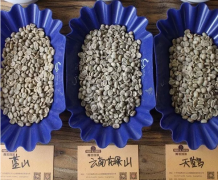
Flavor characteristics of Jamaica Blue Mountain No. 1 Coffee Taste description where can I find authentic Blue Mountain coffee beans?
According to data from the World Trade Organization and Chinese Customs, the total global exports of Jamaica in the past five years are as follows: 842 tons in 2011, 2012, 592 tons in 2013, 692 tons in 2013, 449 tons in 2014, and 555 tons in 2015. China's imports in the past five years are as follows:

Introduction to the varieties of coffee flavor and taste in Yega Sheffield Cochel Manor with long aftertaste and mellow thickness
China Coffee Network Chelba is a boutique coffee and raw bean cooperative located in the Gedeo area of Yejasuefei. There are about 700 smallholder growers in the Gedeo area who send the harvested coffee fruits to the Chelba cooperative's processing plant for centralized processing. The average planting area of these small growers is 2 hectares. The total area of coffee cultivation in this area is about 888 hectares. Species

Geographical Distribution cultivation techniques of Coffee trees
Coffee grows mostly in countries with alpine terrain between the Tropic of Cancer and the Tropic of Cancer. It is native to tropical Africa and is introduced and cultivated in South and Southwest China. [2] the cultivation technology editor requires that the origin of the coffee tree [4] is in Ethiopia in Africa. In botany, the coffee tree belongs to the evergreen tree of the coffee subgenus of Rubiaceae, and the so-called coffee bean is actually the fruit of the coffee tree.

Geographical Distribution cultivation techniques of Coffee trees
Coffee grows mostly in countries with alpine terrain between the Tropic of Cancer and the Tropic of Cancer. It is native to tropical Africa and is introduced and cultivated in South and Southwest China. [2] the cultivation technology editor requires that the origin of the coffee tree [4] is in Ethiopia in Africa. In botany, the coffee tree belongs to the evergreen tree of the coffee subgenus of Rubiaceae, and the so-called coffee bean is actually the fruit of the coffee tree.

Where are the three largest coffee producing areas in the world? where is the coffee producing area in China?
Professional coffee knowledge exchange more coffee bean information Please pay attention to the coffee workshop (Wechat official account cafe_style) Coffee has a lot of producing areas, climate, soil, altitude produced by different coffee flavor is not the same, there are flowers and fruits, herbs, berries and other different flavor, these are coffee producing areas are different all the flavor. We all know the production of coffee.

A variety of spices, fruit flavours, coffee beans, flavours, taste, aroma characteristics.
Elevation: 1500- 1700m Processing method: Sunlight Variety: Typica, Heirloom Producer: Smallholder Harvest Concentrated Processing Flavor: Jackfruit, Spice, Wine Ethiopian coffee mainly has eight producing areas: Ekempti, Limu, Illubabor, Djimma, Harrar, Teppi/Bebeka, Sidamo, Yirgacheffe. Ethiopian coffee in Taiwan

Katim Coffee Bean Historical Story the characteristics of hand-made flavor introduce the output of Yunnan boutique coffee bean varieties
The field management measures are suitable for the management of general small-grain coffee. Propagation method: adopt seed propagation, select 5-year-old fine mother tree, harvest fully mature, fruit shape is normal, full, size is basically the same, with two-seed fruit as seed, using sand bed to promote germination, plastic bag seedling. The annual average temperature of the selected forest land is 1921 ℃, and the accumulated temperature of 10 ℃ is more than 6800 ℃.

Colombia's coffee exports will be affected by the epidemic in 2020! Colombia is optimistic about the domestic coffee market
Because of the impact of the epidemic, the travel of people all over the world has been restricted, and countries have implemented traffic control regulations one after another, which has affected the exports of many coffee-producing countries to varying degrees, and disrupted many coffee supply chains around the world. the production, transportation and retail of coffee are greatly affected. Colombia, the fourth largest economy in Latin America, has at least 540000 countries.

Find out where to grow coffee in China| How do coffee beans grow?
Professional coffee knowledge exchange More coffee bean information Please pay attention to coffee workshop (Weixin Official Accounts cafe_style) Coffee is generally planted in tropical and subtropical areas before 25 degrees north and south latitude, only these countries and regions have the conditions for planting coffee; coffee planting takes 3~5 years to bloom and bear fruit; good shading effect, high altitude, volcanic rock areas, good bean seeds

Costa ambition to re-invest in the Chinese market British coffee culture once again attack!
Professional baristas please follow the coffee workshop (Wechat official account cafe_style). According to the Daily Telegraph on Tuesday, Costa Coffee paid an additional 35 million pounds to its stake in its joint venture in China to invest in the Chinese market.

Chinese Coffee--Pu 'er Coffee
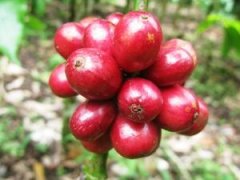
Zhang Kui, a farmer from Dakaihe Donghui Forest Society in Nanping Town, Simao District, Pu 'er City, is drying coffee beans in front of a newly built house. There are 19 coffee farmers in the village, and every family is harvesting the joy of harvest. At the coffee purchasing station, coffee of the quality meeting the purchasing requirements is replaced into uniform packaging bags and stored for shipment. Zhang Kui uses a machine to peel coffee fresh fruit in his yard. now is
The 4th China Mangshi Coffee Culture Festival will be held in Mangshi, Dehong Prefecture.
China Economic News Network: (Deng Daoyong) on December 30, the reporter learned from the Yunnan Coffee Industry Association: sponsored by the China-ASEAN Coffee Cooperation Committee, the China Coffee Engineering Research Center, and the Yunnan Coffee Industry Association, the 4th China Mangshi (International) Coffee Culture Festival hosted by Dehong Hougu Coffee Co., Ltd. will be held in Mangshi, Dehong Prefecture, from January 23 to 25, 2015.

Characteristics of authentic Jamaican Blue Mountain Coffee what is the price and taste of blue mountain flavor coffee beans in legal producing areas?
Professional coffee knowledge exchange more coffee bean information please follow the coffee workshop (official Wechat account cafe_style) according to the data of the World Trade Organization and Chinese Customs, the total global exports of Jamaica in the past five years are as follows: 842tons in 2011, 2012,592tons in 2013, 492tons in 2014, 555tons in 2015, China's imports in the past five years are as follows:
The History of Coffee introduction and expansion in China in the early stage (5)
1. From the first peak period of the development of China's coffee industry (1952-1961) to the late 1940s, according to recorded figures, there are 2173.33 hectares of rubber plantations in Hainan Island, with a total of 867600 rubber trees, with an annual output of 199,000 tons of dry rubber, and more than 300,000 coffee plants. the annual output of coffee beans is 1 ton. According to a survey in the early 1950s, there was a large amount of coffee left in Fushan area of Chengmai County, with a total of 70,000.

A brief introduction to the characteristics and Development of Panama Kasha Coffee Flavor Manor
The country provides its high-quality products to specialized stores around the world, such as Denmark, the United Kingdom, Greece, Norway, Sweden, South Korea, Japan, Taiwan Province of China and the United States. The appropriate microclimate, soil, temperature and highly suitable for sowing, planting and harvest of a variety of unique coffee. These coffees are jasmine, citrus, ripe fruit, berries, caramel, special sweetness and vanilla.
Coffee planting History of Coffee introduction and expansion in China in the early stage (5)
1. From the first peak period of the development of China's coffee industry (1952-1961) to the late 1940s, according to recorded figures, there are 2173.33 hectares of rubber plantations in Hainan Island, with a total of 867600 rubber trees, with an annual output of 199,000 tons of dry rubber, and more than 300,000 coffee plants. the annual output of coffee beans is 1 ton. According to a survey in the early 1950s, there was a large amount of coffee left in Fushan area of Chengmai County, with a total of 70,000.

The rise of Chinese coffee in Yunnan Yunnan small grain coffee is so cheap whether it can be regarded as boutique coffee?
Professional coffee knowledge exchange more coffee bean information please follow the coffee workshop (Wechat official account cafe_style) how to brew Yunnan small coffee when it comes to Yunnan Pu'er, the first thing that comes to mind may be tea. But little is known about the coffee produced in Pu'er, which is already well-known in Asia. In the 1990s, large commercial brands like Nestl é began to spread.

Investment Analysis and Prospect Forecast of Chinese Coffee Industry
Coffee, tea and cocoa are called the three major drinks in the world. Coffee tree is a small evergreen tree of Rubiaceae. Coffee for daily consumption is made from coffee beans combined with various cooking utensils, and coffee beans refer to the nuts in the fruit of coffee trees, which are then roasted by appropriate roasting methods.